Why foraging addresses ecological crisis
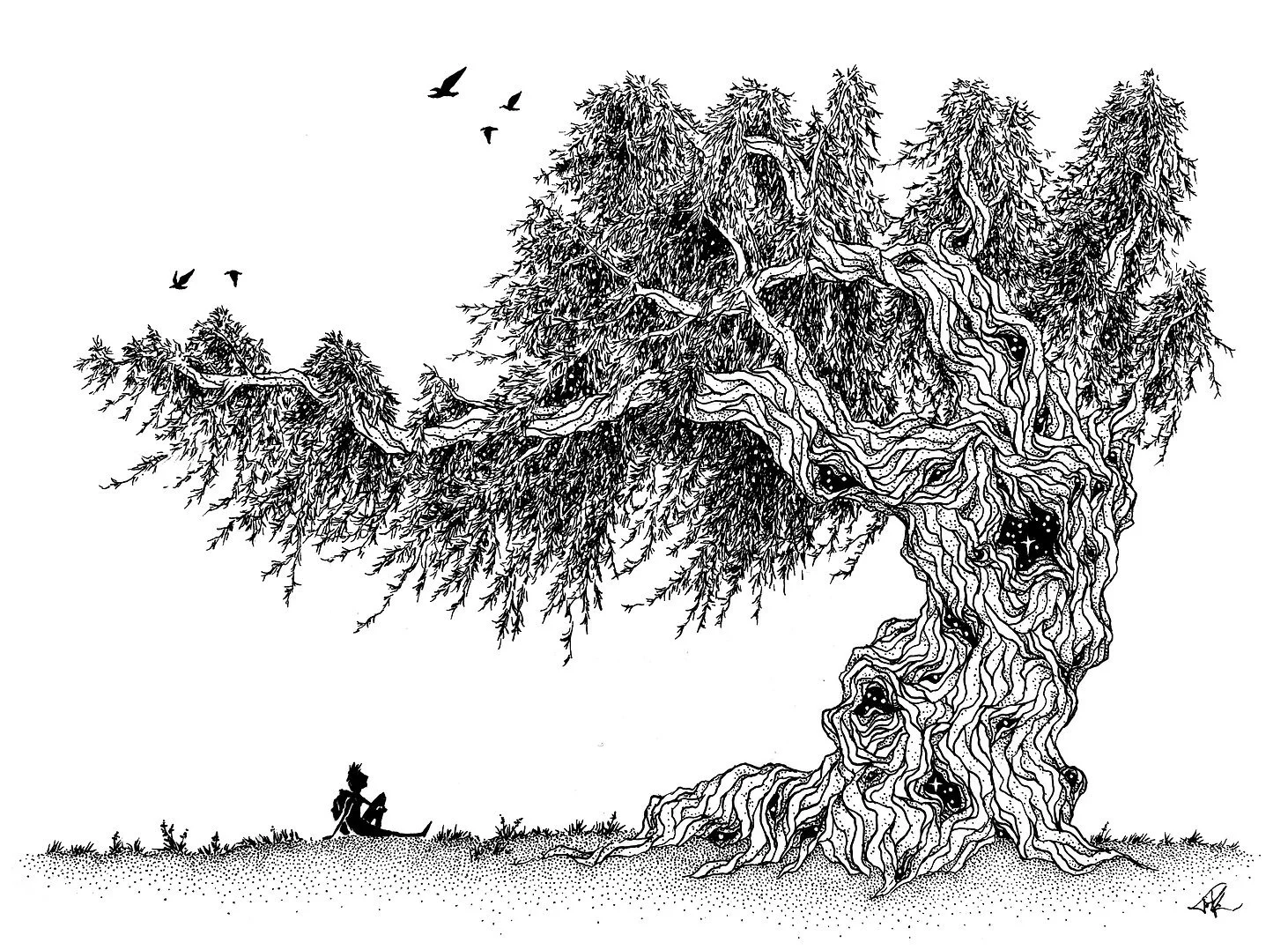
Foraging wild plants cannot feed 8 billion people. The wild and abandoned plants growing in our urban and suburban ecosystems can supplement, nourish, and reconnect — but they cannot replace the transformation of agricultural systems that climate stability requires. That is not what this piece is arguing.
What foraging can do, which policy alone cannot, is change who we are in relation to the land. And from that changed relationship, the political will for deeper transformation becomes possible. The leverage here is addressing spiritual, cultural, and psychological loneliness— not measuring calories from foraged food. See a fuller exploration of these dimensions here. But in a crisis driven as much by a failure of imagination and belonging as by a failure of technology or policy, that may be precisely the kind of leverage that is most urgently missing from our movements.
With that framing in place, here is why the science of industrial food systems should matter deeply to every climate activist — and why learning to recognize the plants growing around us and respect the ecosystems they grow in is one of the most grounded ways to understand what we are actually up against.
Reason 1: The food system and the climate are the same crisis
It is tempting to think of the climate emergency and our industrial food system as separate problems to be tackled one at a time. They are not. They are different expressions of the same underlying logic — one that treats living systems as inputs to an economic machine.
Our global food system — from farm to fork — is responsible for somewhere between 20% and 37% of all the greenhouse gases the world produces each year. That includes emissions from manufacturing synthetic fertilizers, from soil being plowed, from animal agriculture, from the ships and trucks moving food around the planet, and from the food that rots in landfills.
The synthetic fertilizers alone are a startling story. The process used to make them — developed a century ago and largely unchanged — consumes about 1–2% of the world's entire energy supply. Once those fertilizers are applied to fields, only about half are actually absorbed by crops. The rest runs off into rivers and oceans, starving coastal waters of oxygen and creating vast dead zones — more than 700 of them worldwide, including one in the Gulf of Mexico the size of New Jersey — where almost nothing can live.
For those of us watching the recent news about the slowing of the Atlantic Ocean's circulation system with alarm: agricultural runoff directly alters the freshwater content and chemistry of the ocean. The greenhouse gases accumulating in the atmosphere, the food system, and the disrupted ocean system are not separate problems. They are deeply entangled threads of the same unraveling.
Reason 2: Industrial agriculture is destroying the soil that stores our carbon
Beneath our feet lies one of the most complex and underappreciated ecosystems on Earth. Healthy soil is alive — threaded with fungal networks that move carbon and nutrients between plants, teeming with bacteria, worms, and insects that recycle the building blocks of life. These underground networks store more carbon than all the world's forests and the atmosphere combined. We are liquidating that asset.
Industrial farming has been quietly destroying soil for decades. Repeated plowing exposes stored carbon to the air, where it becomes carbon dioxide. Chemical treatments kill the fungal networks. Growing the same crop year after year strips the biological diversity that allows soil to sustain itself, making it progressively dependent on synthetic inputs just to stay productive — a dependency loop with no natural exit.
What fills the spaces between the crops — what we routinely spray and dismiss as weeds — turns out to be the soil's own restoration crew. These plants are what ecologists call pioneer species: the first responders after disturbance. Dandelion roots break through compacted earth and open channels for water and air. Clover pulls nitrogen directly from the atmosphere and deposits it into the soil. Stinging nettles draw minerals up from deep below the surface. Plantain accumulates calcium, magnesium, and silica. These plants are actively trying to repair the damage we have caused. Our response, at industrial scale, has been to spray them with herbicide.
When we learn to recognize and value these plants, we are not just learning botany. We are learning to read the land's own intelligence — and to understand, viscerally, what we keep destroying.
Reason 3: The pesticide economy is a public health crisis that most activists have not fully reckoned with
Each year, humanity applies roughly four billion kilograms of pesticides to the land. The global industry generating those chemicals is worth around $84 billion annually. But the costs that never appear on that invoice are staggering.
Glyphosate — the world's most widely used herbicide — has been classified by the World Health Organization's cancer research agency as a probable human carcinogen, with people at high exposure showing significantly elevated rates of non-Hodgkin lymphoma. More than 50 commonly used pesticides are classified as endocrine-disrupting chemicals, interfering with estrogen, testosterone, and thyroid function at concentrations measured in parts per trillion. Researchers have estimated that the health costs of these hormone-disrupting compounds run to over €160 billion per year in Europe alone — driving obesity, diabetes, infertility, and neurodevelopmental harm in children.
These burdens are not distributed equally. Farmworkers — the majority of whom in the United States are Latinx immigrants, many undocumented — face pesticide exposures orders of magnitude higher than the general population, with the fewest legal protections and the greatest barriers to healthcare. In a political moment when worker protections are being stripped and immigration enforcement is intensifying, the pesticide economy is inseparable from racial and economic justice.
Then there are the bees. Neonicotinoid insecticides, now found in the pollen and nectar of wildflowers growing near treated fields, have been shown to cut wild bee reproduction by up to half. Insect populations in some well-studied regions have fallen by 75% over the past three decades. Insects are the foundation of most food webs and the primary pollinators of both wild plants and crops. Their disappearance does not stay in a field. It unravels ecosystems from the bottom up.
Reason 4: The plants we have declared weeds are more nutritious than the ones we grow
Here is something that tends to surprise people, including many scientists: the food our industrial system produces has been getting measurably less nutritious over time.
Studies comparing common vegetables grown today with those grown in the 1950s show consistent declines in protein, calcium, iron, riboflavin, and vitamin C — losses ranging from 6% to 38% depending on the nutrient. The mechanism is straightforward: we bred crops for yield, shelf life, and appearance, not nutrition. The more calories we extract from an acre, the more diluted the nutrients per calorie become. We are producing more food and getting less nourishment from it.
Meanwhile, the plants growing freely at the edges of our paths and gardens contain nutritional profiles that would be remarkable on any supplement label. Lamb's quarters — a common garden weed — contains more calcium than milk, more iron than beef, and more vitamin C than oranges. Stinging nettles carry two to five times the iron of spinach, along with anti-inflammatory compounds linked to chronic disease prevention. Dandelion greens have more beta-carotene than carrots and more calcium than kale, plus a prebiotic fiber that feeds the gut microbiome. Purslane is the richest plant source of omega-3 fatty acids known to science.
These plants grow for free, in your neighbourhood, already adapted to your local climate and soil. No fertilizer. No pesticide. No refrigerated truck. No packaging. No supply chain. They are, in a very real sense, the food system that existed before we decided to build the one we have now — and the one I encountered when I spent time with Bhil and Lepcha communities in India in recent years, where this knowledge has never been fully severed.
Reason 5: Industrial food broke a circle that sustained life for millennia — and we are paying for it twice
For most of human history, the nutrients in food completed a cycle. They came from the soil, passed through plants and animals and people, and eventually — through composting, waste, and death — returned to the soil. The circle closed. The land was replenished by the very life it sustained.
Industrial food systems broke that circle permanently and at planetary scale. Nutrients now travel in one direction: extracted from soil in one place, embedded in food, shipped globally, consumed, and then flushed into waterways as sewage rather than returned to the land. The soil loses what it gave. The waterways receive what they cannot absorb. The atmosphere accumulates what should have stayed underground.
We pay for this broken system twice. Once at the grocery store. And again in the healthcare costs of diet-related disease, in the environmental costs of degraded rivers and depleted soils, and in the destabilized atmosphere we are now all scrambling to understand. Estimates of the true external cost of industrial food in the United States alone — when health impacts, soil loss, water pollution, and emissions are honestly priced — run to well over a trillion dollars per year.
We have built a system in which we work longer hours to earn money to buy food that is less nutritious than what is growing, unbidden and free, in the ground beneath our feet. That is not a policy failure at the margins. As systems thinkers would say, it is the model working exactly as designed.
Learning to forage — learning to see the weeds — does not by itself dismantle that model. But it begins to make the model visible in a way that no graph or report quite manages. And in a movement that urgently needs people who feel, not just know, what is at stake, that visibility is not a small thing.
(This piece draws on research from the United Nations’ IPCC’s Sixth Assessment Report, the Food and Agriculture Organization, the Endocrine Society, and peer-reviewed studies published in Environmental Health Perspectives, Science, and the Journal of the American College of Nutrition, among others.)