Energy and Concentration: Vīrya and Samādhi Pāramitā
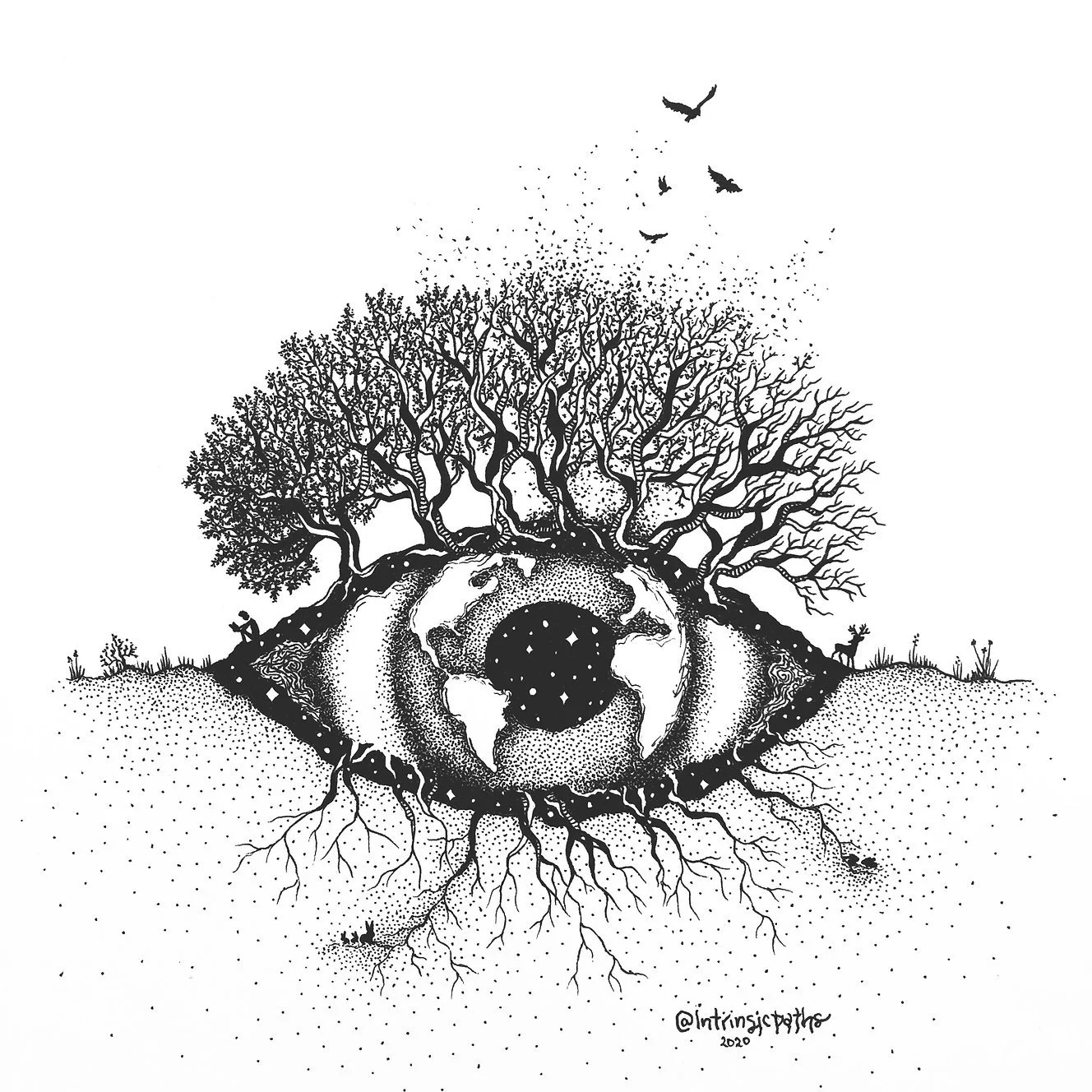
Defining Energy and Concentration
Vīrya in Sanskrit means energy, effort, diligence, or heroic vitality — the kind of life-force that shows up to practice not because it is forced to, but because something in it genuinely wants to move toward what is true and good. Samādhi means concentration, absorption, or collectedness — the quality of attention that can gather itself fully into one place, one moment, one being, without scattering.
These two paramitas are placed together in this article because they can, in lived experience, be nearly inseparable. When we are energized by something, our concentration follows naturally. When we are deeply concentrated, energy arises from the concentration itself rather than from external push or willpower. I have chronic Lyme disease and usually need a lot of sleep outside of retreats. However, during silent meditation retreats (sesshins), I find myself meditating for 8-9 hours a day often without noticing the time has passed during one session and need only 4-6 hours of sleep every night: there is a quality of absorption that is simultaneously restful and revitalizing.
The reverse can also be true. We can give energy to things that do not truly concentrate/collect us — we can be busy, effortful, productive, and still feel diffuse, scattered, nowhere in particular. And we can be concentrated in a narrow, effortful way that is actually exhausting rather than enlivening. The question this article invites is not simply am I energetic and concentrated? but what is the quality of this energy and concentration — and is it wise, warm, and aligned with all the other paramitas?
In the highest sense, vīrya and samādhi together describe a state in which our full life-force and our full attention are gathered in the same direction — not by suppression of everything else, but by something so genuinely magnetic that nothing else competes. It is the state in which a great musician is entirely the music, or a grandmother is entirely present to her grandchild's question, or a grief ceremony releases something that no effort could have forced.
Energy, Concentration, and the Other Paramitas
Before we explore each paramita through four lenses, it is worth pausing on a modern tension that the Buddha's original teaching did not have to contend with quite as directly: the paradox of high performance.
In modern Western dominant culture, energy and concentration are treated as cardinal virtues — and optimized for accordingly. Productivity culture, hustle culture, even some forms of meditation training treat the ability to focus intensely and sustain effort as an end in itself. And yet this kind of concentrated, high-energy engagement can become a way of bypassing patience and generosity altogether. The person who is most "in the zone" is often the least available for slowness, surprise, relationship to humans or land, or the needs of others that interrupt the momentum. High-functioning concentration can become a very refined form of isolation.
Genuine vīrya and samādhi, as paramitas, are not the same as peak performance states. A paramita is a perfection that carries all the others within it. Wise energy is energy that knows how to rest, how to give, how to wait. Wise concentration is concentration that remains porous to the living world rather than sealing itself into a private task. When energy and concentration are genuinely wholesome, patience is not interrupted by them — it is deepened. Generosity is not crowded out — it flows more easily. The gathered mind is also, paradoxically, the most open mind.
What Energy and Concentration Feel Like in the Body
Think of a moment when you were genuinely energized by something — not caffeinated or stressed, but warmly lit up, moving toward something that felt genuinely worth moving toward. And at the same time, gathered: your attention not scattered across ten things but present, here, with this. What did that feel like in the body?
Most people, when they look closely, notice something like:
A quality of aliveness and ease at the same time — not tense, not slack
Warmth in the chest and belly, often a slight sensation of expansion
Breath that is full and relatively slow — deeper than usual, without effort
The body feeling upright of its own accord, not held up by will
Eyes that are soft and alert simultaneously — what some Zen teachers call "wide-angle vision"
A sense of being oriented — pointed in a direction — without strain
This is very different from the body experience of forced effort or anxious productivity. In those states, you might notice shoulders creeping toward your ears, breath held slightly, jaw working, a sense of monitoring yourself from outside. That state can produce output. But it is not samādhi. It is stress wearing concentration's clothes.
Now feel into the opposite: a moment when energy and concentration both refused to come. When everything felt flat, far away, impossible to engage. Or a moment of manic, scattered busyness that felt urgent but empty.
The Far Enemy: Burnout, Agitation, and Fragmentation
The far enemy of wise energy and concentration comes in two distinct flavors:
The first far enemy is too much — agitation, drivenness, and fragmentation. This is energy that has lost its wholeness. The person is highly activated, perhaps highly productive, but the concentration has narrowed so far that everything outside the single point of focus has been excluded. The Zen tradition has a saying for this gone wrong: a sword that is sharpened too fine becomes brittle. Energy concentrated to an extreme without spaciousness becomes rigidity, obsession, or the particular kind of exhaustion that comes from trying to hold the mind in a single beam for too long.
Too much energy directed at one dimension of life creates its own imbalance: the activist who cannot stop, the meditator who turns practice into achievement, the scientist who loses their body in the search for data. Something that should nourish life begins to fracture it instead. The body here is sympathetic-system activated and often chronically so: elevated heart rate, tight chest, difficulty taking a full breath, a buzzing or humming quality of alertness that does not resolve into rest. The mind is fast, sharp, and often slightly irritable — easily disrupted, easily frustrated when interrupted.
The second far enemy is burnout and collapse — the state that follows when the first has been sustained too long, or when energy was demanded by a system and taken, and nothing was returned. Burnout is not laziness. It is the nervous system's accurate report that the withdrawals have exceeded the deposits. The body in burnout is heavy, gray, depleted. The very activities that once carried genuine energy feel hollow. Concentration becomes nearly impossible — not from distraction but from depletion.
Both of these far enemies deserve curiosity rather than judgment. The question is not "why can't I sustain my effort?" but "what does my system believe about what is demanded of it, and whether rest or spaciousness is safe?"
The Near Enemy: Withdrawal and False Serenity
The near enemy of wise energy and concentration looks, from outside, like composure. The person is still. They are not obviously agitated. They may appear equanimous, even spiritual. But something essential has gone quiet that should not be quiet — not because it has been genuinely released, but because it has retreated.
This is the freeze or collapse response wearing the face of equanimous concentration. The near enemy is disengagement that presents as centeredness: the person who has learned to hold themselves very still in the face of demands that feel overwhelming, and has come to call that stillness "practice." Or the person who gives enormous concentration to safe, controlled, manageable tasks while their full life-force waits somewhere behind a door they cannot quite open.
Near-enemy concentration can also be the focused engagement that is actually a form of avoidance — using busyness or intense absorption in one thing to not feel something else. The grief that never gets tended because there is always another important task. The relationship that never gets genuine presence because the project is always more concentrated-feeling than the messy, unresolvable human being in front of you.
The body signatures of the near enemy are subtler than the far enemy's:
A quality of flatness or distance — present, but not quite in contact
Effort required to maintain what looks effortless — a subtle holding
Difficulty locating genuine interest or appetite; engagement that is dutiful rather than alive
A sense of performing concentration rather than inhabiting it
Energy that is reliable but joyless — steady but not warm
These states are particularly common in people who have learned to function under sustained stress, threat, or overload — which is to say, many people practicing in the middle of polycrisis. Functional freeze looks like discipline from outside. The body knows the difference.
How to Tell the Difference from Inside
Is there warmth? Genuine wise energy and concentration have a quality of warmth — not necessarily intensity, but aliveness that feels good, even when the content being engaged with is difficult. The near enemy is cool, managed, held.
Can you be interrupted? Wise concentration remains porous — it can receive a question, a change in the weather, the arrival of grief, without the whole state collapsing. The far enemy's hyper-focus shatters when interrupted, and the fragmentation that follows is disproportionate. The near enemy is hard to interrupt because it was never quite fully engaged in the first place.
Does the body want to continue, or does it want to rest? Genuine vīrya, even after long engagement, leaves a quality of clean tiredness — satisfied, somewhat spent, but not emptied. Forced effort and the near enemy both tend to leave a kind of unresolved residue — tiredness without satisfaction, rest that doesn't restore.
What is the quality of the "I" that is working? When energy and concentration are genuinely wise, the sense of self often becomes lighter, more fluid, less rigid. The task and the person doing it begin to merge slightly. When they are far-enemy or near-enemy states, the "I" is typically more prominent — effortfully managing, monitoring, performing, or hiding.
Four Lenses
Hinayana: Early Buddhist View
The early Buddhist teaching on energy (vīrya) emphasizes what is sometimes translated as "right/wise or wholesome effort". “Wise” effort is not maximum effort. It is four-fold: the effort to prevent unwholesome states from arising, to release them when they have arisen, to cultivate wholesome states, and to sustain them when they have arisen.
This is a teaching about wise regulation, not about maximizing output. The famous story of the lute strings makes this explicit: A monk (Sona) was practicing walking meditation so intensely that his feet bled, and his concentration was not improving. The Buddha asked him: when you played the lute, were the strings most resonant when they were too loose, too tight, or just right? Sona understood. The early Buddhist teaching on vīrya is fundamentally a teaching about finding the tone — not too slack, not too strained — that makes genuine concentration possible.
The early texts on samādhi describe four jhanas (concentration or absorption states), each with distinct qualities: initial movement of mind and joy in the first, then settling into subtler joy and confidence, then equanimity and clarity, then pure equanimous awareness. This is not an achievement ladder. It is a map of how the mind naturally settles when the conditions — ethical conduct, physical ease, genuine interest — are in place. They arise when the clutching stops.
Mahayana View
The Mahayana tradition places vīrya in the context of the compassionate (Bodhisattva) path — energy in service not of personal achievement but of the liberation of all beings. This reframes the whole question of what our energy and concentration are for.
In the Mahayana view, energy directed solely toward one's own practice or one's own liberation gradually runs out of fuel, because the self it is serving is ultimately insubstantial. But energy directed toward the genuine welfare of others — including the difficult, the ungrateful, the ones who challenge us most — can draw on a different source. Compassionate vīrya is sometimes described as inexhaustible precisely because it is not generated by the self's ambition. It draws on something larger. Think about energy of a compassionate mother or friend who wants to protect their child or friend from oppression!
When genuine love and care for all beings becomes the ground of practice, concentration is not something you have to effortfully maintain. It gathers around the caring the way water gathers in a bowl. This is the Mahayana correction to spiritual drivenness: if concentration feels like an achievement, check whether your love is the actual ground of it.
Buddhayana / Emptiness / Indigenous / Sahajayana View
From the emptiness perspective, wise energy and concentration are not things the practitioner generates. They are what becomes available when the practitioner stops blocking what is already, naturally, here.
The living world is not lethargic. Look at a seed breaking through concrete, a mycorrhizal network spanning a forest, a river cutting through stone over centuries. Life tends toward engagement. Energy is the basic nature of form. What we call our "lack of energy" or our "difficulty concentrating" is almost always — from this view — the result of something that is blocking the natural flow: unprocessed grief, unmet fear, the accumulated weight of being asked to give without being replenished. Remove the blockage and something moves again on its own.
Indigenous wisdom traditions often carry this understanding in the language of right relationship. Robin Wall Kimmerer describes attending to what the plants are teaching: she describes a form of concentration that is not self-generated — it arises from genuine reciprocal relationship with what is being attended to. The student becomes concentrated because the teacher — the plant, the watershed, the fire — is genuinely interesting, genuinely alive, genuinely calling. The attention and energy arises when we are in real contact with what is real and we experience belonging!
The Sahajayana View: Emotions as Deities, Energy as Sacred Fire
In the Sahajayana view — the most animist branch of Tantric Buddhism — energy itself is understood as the fundamental currency of the sacred world. Every emotion, every impulse, every movement of aliveness in the body is not merely psychological. It is an expression of the sacred energies that animate the whole living cosmos.
What we call "low energy" or "inability to concentrate" often has a deity at its root — not an obstacle but a messenger. Perhaps it is the deity of grief, waiting to be honored. Perhaps it is the sacred force of exhaustion calling us to genuine rest rather than management of rest. Perhaps it is the spirit of overwhelm, asking us to look honestly at what has been piled onto this body and nervous system by forces outside the self.
This view also reframes forced effort as a spiritual problem rather than a virtue: a practitioner who is pushing, straining, grinding through practice has not yet found the natural fire. They are burning their own house for warmth. The practice is to find a deeper source.
Polycrisis / 21st Century View
We live inside systems that have a profound stake in the misdirection of our energy and the fragmentation of our concentration. This is not incidental. It is designed.
Social media platforms are engineered, with extraordinary sophistication, to capture and hold our attention — not to concentrate it, but to fragment it. The infinite scroll, the notification, the dopamine loop of variable reward: these produce a state that looks like engagement but functions as dispersion. We spend enormous energy on platforms that leave us feeling drained rather than alive. We give our concentration to algorithmically selected content chosen for emotional activation rather than genuine nourishment. The result, across populations, is a form of collective attention disorder: an inability to sustain deep focus, a restlessness that reaches for the screen as soon as any discomfort arises, an atrophying of the capacity for genuine absorption.
Advertising and mass media operate similarly: their purpose is not to give our energy and concentration somewhere true to go, but to intercept our desires and redirect them toward individualistic consumption. The person who sits down to rest and instead spends two hours in a state of agitated passive consumption has not rested. They have had their rest taken from them and meanwhile more mining or climate pollution is generated in creation or operation of AI data centers and electronic gadgets!
AI systems — including the most sophisticated ones — present a newer and more complex challenge. They can be genuinely useful. They can also enable a form of cognitive outsourcing that, over time, atrophies the very capacities that make deep concentration possible: the slow, patient working-through of a problem, the willingness to not know, the development of judgment that only comes from sustained engagement with difficulty. If AI does our concentration for us, we do not develop the concentration. We rent it.
The polycrisis view asks: toward what are we directing our life-force? The crises we face — ecological collapse, social fragmentation, political violence, the erosion of the conditions that make life livable — require precisely the kind of sustained, warm, wise energy and concentration that contemporary digital culture is most systematically dismantling. This is not an accident. A distracted population is a more manageable population that will not speak up against wars and climate crisis.
Vīrya pāramitā in this context is a political act. Choosing what genuinely deserves our energy and attention — turning the phone over, ending the scroll, sitting with discomfort rather than reaching for stimulation — is not a private spiritual preference. It is an act of resistance against systems that profit from our dispersion. And samādhi pāramitā, the genuine gathering of attention, is a form of sovereignty: the reclaiming of our own mind as a home we can inhabit rather than a territory that has been colonized.
A Teaching Image
There is an image in the Zen tradition: the great bell hanging in the bell tower. Struck just right, with just enough force, it rings out fully and the sound carries for miles, resonant, complete. Strike it too hard and it clangs — the sound shatters rather than sings. Strike it too softly and it barely murmurs — present, but not carrying.
Wise energy is the arm that knows how much force is right. Wise concentration is the stillness that lets you hear the resonance rather than the strike.
The far enemy is the arm that keeps hitting, faster and faster, until the sound is only noise. The near enemy is the arm that will not commit to the strike, and holds the mallet indefinitely, waiting for the perfect moment that never quite arrives.
The bell rings completely, when struck completely, just once.
The body knows which kind of striking it is doing, if we are willing to be still enough to hear the difference between the ring and the clang.
Four Contemplations
Sit with these not as intellectual questions but as inquiries to be taken into the body and into practice over time.
1. What calls forth your warmest, wisest energy and concentration? When you feel most genuinely alive and gathered at the same time, what conditions are present? What is the quality of your relationship to whatever you are engaged with — is it love, curiosity, care, necessity? Does this state feel like something you generate, or something that arises when the right conditions are in place?
2. What drains your energy and scatters your concentration? When energy and attention refuse to come, what does the body say if you ask it honestly? Is it exhaustion from having given too much for too long? Is it grief waiting for attention? Is it the signal that something is genuinely not worth your life-force?
3. What do wise energy and concentration feel like in your body — and what do their absences feel like? Can you locate the felt sense of being genuinely energized and concentrated: where does it live, what is its temperature, does it feel expansive or pointed or both? And the felt sense of agitation masquerading as energy, or flatness presenting as calm — can you find those too? The more precisely you can map these states in the body, the earlier you will recognize which one you are in.
4. What sense of "I" arises when you are energetic and concentrated — and when you are not? When energy and concentration are genuinely wise and warm, what happens to the sense of self? Does the "I" feel larger or smaller, tighter or more fluid, more defended or more transparent? And when the far or near enemy is present — when effort is strained, or attention is collapsed — what quality of "I" is at the center of that experience? Is it the same self, or a different construction?